

Roadworthy certificates (RWC)
You need a roadworthy certificate to sell or re-register a car in Victoria. We inspect the 7 areas on the official list and issue the certificate when the car passes.
What is a roadworthy certificate?
A roadworthy certificate (RWC) shows that your car is safe enough to drive on public roads. The inspection checks the safety items on the official Victorian list, such as the brakes, tyres, steering, lights and seatbelts.
It is a safety check on the day of the inspection. It is not a full check of the car's condition or how reliable it is.
When you need one
In Victoria you usually need a roadworthy certificate in these cases. A certificate stays current for 30 days from the day it is issued.
-
Selling a car
-
Re-registering a car
Source: Transport Victoria: Roadworthy certificate (opens in a new tab)
-
Clearing some defect notices
Source: Transport Victoria: Roadworthy certificate (opens in a new tab)
You don't need one for
- Brand new vehicles never registered anywhere (a new taxi still needs one)
- Light trailers (4.5 tonnes or less when loaded) and brand-new heavy trailers
- Recreational motorcycles, farm-bike-scheme motorcycles, quad bikes and ATVs
- Vehicles not made to carry people or goods, such as tractors and forklifts (unless fitted on a truck cab and chassis)
Source: VicRoads: Vehicles exempt from roadworthy certificate (opens in a new tab)
Electric vehicles too: we do roadworthy inspections of electric cars.
What we check
The inspection covers the seven areas on the official Victorian list.
-
Brakes
When you press the pedal, the car has to slow down and stop safely.
- All brake parts work and are fitted securely
- Brake pads and discs are not worn past their limits
- No leaks or damage in brake hoses and pipes
- The car stops within the set distance
- The handbrake holds the car still on a slope
-
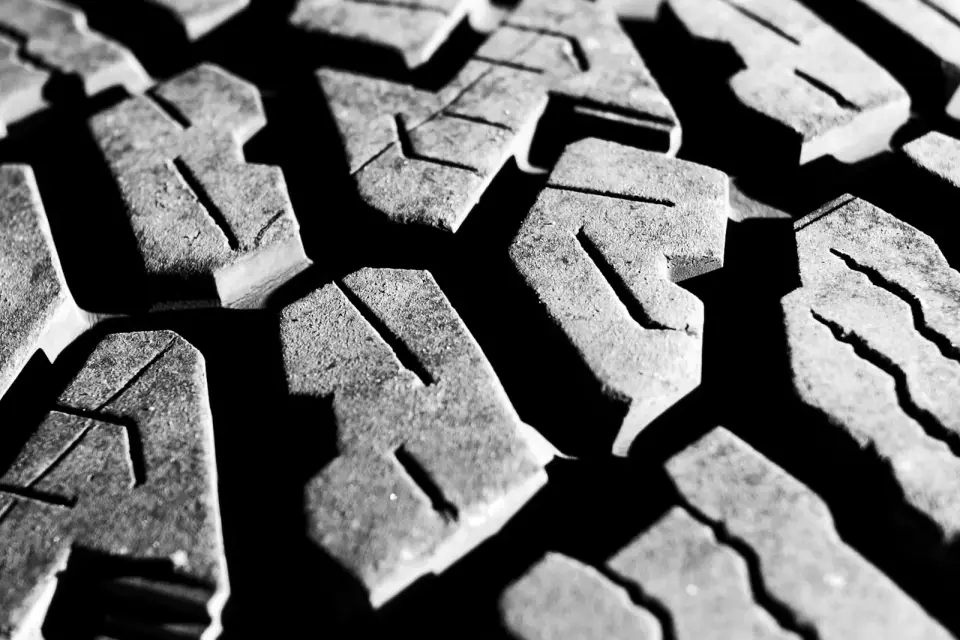
Wheels and tyres
The only parts that touch the road. We check they are safe to drive on.
- At least 1.5 mm of tread in the main grooves
- No deep cuts, cracks or bulges in the tyres
- Wheels are not cracked, bent or buckled
- Every wheel nut is there and tight
- Tyres on the same axle are the same size
-
Steering and suspension
The car should steer properly and stay steady over bumps.
- No wear or play past the maker's limits
- The car drives straight without wandering
- The steering turns smoothly from lock to lock
- Shock absorbers work and do not leak
- Joints, bushes and wheel bearings are in good condition
-
Lights and reflectors
So you can see, and other drivers can see you.
- Headlights, brake lights and indicators work
- Parking lights and the number plate light work
- Lenses are the right colour, not faded or broken
- Reflectors are there, the right colour and secure
- Dashboard warning lights work
-
Windscreen and wipers
A clear view out. Windscreen, windows, front wipers and washers.
- No cracks or chips that block the driver's view
- Side windows give the driver a clear view
- Front wipers and washers work
- Washer jets are aimed at the windscreen
- Window tint is within the rules
-
Seats and seatbelts
Seats are secure and seatbelts do their job.
- Seats and backrests are secure and not damaged
- Seat adjusters lock and release properly
- Every seatbelt is there and fitted securely
- Belts are not cut, frayed or knotted
- Buckles and retractors work properly
-
Body and structure
The car's frame and other safety-related parts. Safe to drive today.
- No rust, cracks or bad repairs in the structure
- No body damage that could hurt someone
- Doors, bonnet and boot latch securely
- No exhaust leaks into the cabin
- Mirrors, horn and speedometer work
-
Ready for the inspection?
Book a roadworthy Call (03) 8763 1361
What a roadworthy does not check
A roadworthy is a safety check, not a full check of the car. It does not cover:
- Mechanical reliability or the general condition of the car
- Non-safety items such as air-con, electric windows and rear-window wipers
- That checked items keep working after the inspection
- Full compliance with the Australian Design Rules
How it works
-
Step 1
Book
Call us, or send a booking request online. We confirm a time with you.
-
Step 2
Drop off
Bring your car to the workshop at the agreed time.
-
Step 3
Inspection
We check the seven safety areas on the official list, from brakes and tyres to lights and seatbelts.
-
Step 4
Pass, or fix and re-check
Pass: you get your roadworthy certificate. Not yet: you get a report of what to fix, then 14 days to fix it and get it checked again.
If your car fails
- Written report
- 14 days to fix
- Repairs here
- Re-check
- Certificate
You get a written report that lists what needs fixing. You then have 14 days to fix those items and have the car checked again.
After 14 days, the car needs a new full inspection.
Need something fixed? We do car repairs in the same workshop.
Prices
The price depends on the age, type and condition of the car. Call us for a quote before you book.
Do I need a roadworthy?
Common questions
When do I need a roadworthy certificate?
In Victoria you usually need one when you sell a car, when you re-register it, or to clear some defect notices.
Source: Transport Victoria: Roadworthy certificate (opens in a new tab)
How long does a roadworthy certificate last?
It stays current for 30 days from the day it is issued to you. You can use it more than once to register or transfer the car within those 30 days.
Source: Transport Victoria: Roadworthy certificate (opens in a new tab)
What if my car fails?
You get a report that lists the problems. You then have 14 days to fix them and get the car checked again. After 14 days you need a new test.
Source: Transport Victoria: Roadworthy certificate (opens in a new tab)
What does the inspection check?
Wheels and tyres. Steering, suspension and brakes. Seats and seatbelts. Lights and reflectors. The windscreen and windows, including the front wipers and washers. The vehicle structure. Other safety-related parts of the body, chassis or engine.
Source: Transport Victoria: Roadworthy certificate (opens in a new tab)
What does a roadworthy NOT tell me?
It shows the car is safe enough to drive today. It does not tell you if the car is mechanically reliable or in good overall condition, and it does not check things like air-con, electric windows or rear-window wipers.
Source: Transport Victoria: Roadworthy certificate (opens in a new tab)
Which vehicles do not need a roadworthy?
Brand new vehicles that have never been registered, light trailers (4.5 tonnes or less when loaded), brand-new heavy trailers, recreational motorcycles, farm-bike-scheme motorcycles, quad bikes, and vehicles not made to carry people or goods, such as tractors and forklifts. A new vehicle used as a taxi does need one.
Source: VicRoads: Roadworthy certificate exemptions (opens in a new tab)
How much does a roadworthy cost?
It depends on the age, type and condition of the car. Ask for a quote before you start.
Source: Transport Victoria: Roadworthy certificate (opens in a new tab)